

Leeds Beckett University - City Campus,
Woodhouse Lane,
LS1 3HE
Dr Oliver Bray
Dean of School
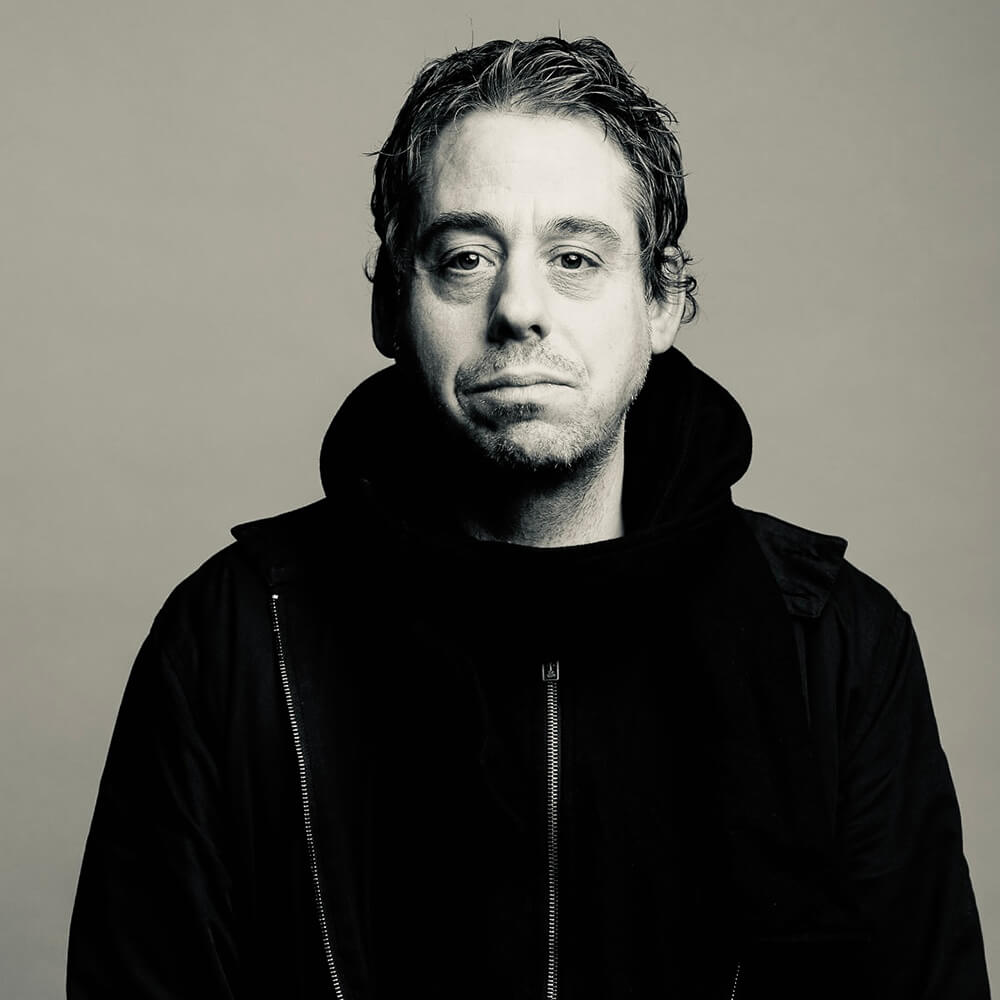
Dr Oliver Bray is the Dean of Leeds School of Arts at Leeds Beckett University.
 0000-0002-9960-3965
 Scopus ID: 57190194023
About
Dr Oliver Bray is the Dean of Leeds School of Arts at Leeds Beckett University.
Dr Oliver Bray is the Dean of Leeds School of Arts at Leeds Beckett University.
Oliver holds an undergraduate degree, awarded first-class, in Theatre Studies (University of Hull), an MA, awarded with distinction, in Contemporary Art (Manchester Metropolitan University), and a practice-led PhD in the poetics of constraint in performance (University of Leeds). He is a Senior Fellow of the Higher Education Academy and a Fellow of the Royal Society of Arts.
Oliver's well-respected performance and live art practice has toured nationally and internationally to venues and festivals including the Sibiu International Theatre Festival, Romania; In between Time, Bristol; and the National Review of Live Art, Glasgow. Oliver is a Board Director for the Centre for Live Art Yorkshire and an Editorial Board member for the Voice and Speech Review, published by Routledge.
Academic positions
Head of Performing Arts
Leeds Beckett University, Leeds, Leeds, United Kingdom | 03 July 2006 - present
Research interests
Oliver's current research interests stem from his professional practice in contemporary performance and live art but are inherently interdisciplinary in nature. As a theatre maker and practice-led researcher, his current interests include methodologies of restriction and constraint, speech-making, the art of rhetoric and the performance potential of 'pataphysical post-truth in the 21st century.
Ask Me About
Publications (26)
Sort By:
Featured First:
Search:
Literary and Theatrical Constraint
Voicing Trauma and Truth: Narratives of Disruption and Transformation
 01 January 2012
Bray O, Bray P1-384 BRILL
01 January 2012
Bray O, Bray P1-384 BRILL
 Authors: Bray P, Bray O, Editors: Bray O, Bray P
This volume brings together a worldwide array of phenomena and research programmes associated with working with trauma.
2008
Assessment, Teaching and Learning Journal4:25-27 Leeds Metropolitan University
Towards an Academic Artist: Recognising Teachers & Learners as Performance Practitioners
Villa
1 January 2009
Greenroom, Manchester Axis Arts Centre, Crewe University of Hull, Scarborough Nuffield Theatre, Lancaster Workshop Theatre, Leeds Seven Arts Centre, Leeds
This research uses performance to investigate the relationship between the ‘play text’ as both literature and as live performance, with specific focus on direct audience participation and linguistic play. Principal research question: How can the language and textual devices of the ‘play text’ be appropriated and manipulated in live performance, to produce new strategies for performance making? This solo performance tonally and structurally resonates with Russian literature (for example Chekhov and Bulgakov) and makes use of playful, pseudo-philosophical vocal wordplay. Three members of the audience are invited/lured into the performance space and are subtly manipulated throughout so that they assume and represent figures within the unfolding narrative. The performance moves between direct readings of the ‘play text’ to digressive interjections from the performer, alongside constructed/invited moments of spontaneous participation from the three audience-performers. These structural and aesthetic devices were developed to seduce the audience with rhetoric and perlocution and deconstruct both literary and dramatic narratives and conventions. Through a live performance context, this work problematises and explores the use and authority of the ‘play text’ and the role of audience-performer in performance. This practice-led research resulted in multiple performances at national venues including; Greenroom, Manchester 2008, Axis Arts Centre, Crewe 2008, University of Hull, Scarborough 2009, Nuffield Theatre, Lancaster 2009, and The Workshop Theatre, Gallery & Studio Theatre, and Seven Arts Centre, all in Leeds 2009-2010 – and in International contexts; Sibiu International Theatre Festival, Romania 2010, Gateshead International Festival of Theatre, 2011, and Flare International Festival of New Theatre, Manchester 2011.
Fathers and Sons: An Autoethnographic Case Study of Bereavement and Trauma
14 March 2011
First Global Conference of Trauma: Theory and Practice Prague, Czech Republic
Bray OP, Bray PFathers and Sons: An Autoethnographic Case Study of Bereavement and Trauma
14 December 2011
Traumatic Imprints: Performance, Art, Literature and Theoretical Practice BRILL
Authors: Bray OP, Bray P, Editors: Barrette C, Haylock B, Mortimer DJust before Sam died, his son Peter travelled from his home in Hawke’s Bay, New Zealand, to conduct some preliminary research with his son Oliver who lives in Leeds, Great Britain. With Peter’s interests in loss, post-traumatic growth and transpersonal experiences and Oliver’s in theatre making, performance and pedagogy they began to discover that they shared much common ground. Shortly after their time together Peter travelled to Moscow to deliver a paper on Hamlet. What follows is a weaving of the thoughts and recollections of three generations of men touched by loss, trauma and grief.
'T.Hanks' B-motion
28 August 2011
Operaestate Festival, Bassano del Grappa, Italy, Yorkshire Dance 2013, Leeds and GIFT 2013 (Gateshead International Festival of Theatre) Author
Bray OP, Krische RThis practice-led research uses dance and theatre to investigate the relationship between live performance (dance-theatre) and mediated work (film), by playing with ideas of filmic representation being regarded as ‘the truth’. The performance involves theatre maker Oliver Bray and dancer-choreographer Rachel Krische deliberately upsetting and responding to the expert practices of one another. Concentrating on the relationship between the voice and body within the context of ‘expertise’, formally this work focuses on the ‘performance attributes’ of the two performers, overtly challenging preconceptions of dance and theatre practices. Principal research question: How can a performer/dancer/collaboration investigate concerns of the ‘expert’ in performance practice and media/celebrity culture? Re-appropriating texts from the films of Tom Hanks along with celebrity award acceptance speeches, this performance repositions the idea that a film might successfully represent the past, while simultaneously drawing the attention of the audience to the inherent performance qualities of the perfomers in the live moment. Through strategies of pastiche, layering and collision, forms of dance and theatre are pitted against each other in order to problematise the ‘worthiness’ of arts practices, using the politics of the personal to cast doubt on global political representation. This research resulted in three performances at the B-Motion Operaestate Festival 2011, Italy, Yorkshire Dance 2013, Leeds and GIFT 2013 (Gateshead International Festival of Theatre).
The Speech Maker
26 November 2011
Compass Festival of live Art, Leeds, Nov 2011. Sibiu International Theatre Festival, May 2012 Compass Festival of Live Art Author
This work is a 12 hour uninterrupted performance of a speech. Texts were sourced and composed live, comprised of submitted speeches (pre-existing and written) from the general public via social media, and various seminal, important or (in)famous speeches from history. Principal research question: How might contemporary notions of authorship, speech-making, rhetoric and participation be utilised and disrupted in a live, durational performance context? This work investigates the function of the author out of context, deliberately leaving references out (and authorship ambiguous) to allow the audience to experience a ‘constellation’ of texts and floating citations. This research resulted in two public performances, firstly at the Compass Festival of Live Art 2011, Leeds, and secondly at the Sibiu International Theatre Festival 2012, Romania. The lead performer (Oliver Bray) read from an autocue non-stop for the duration of the performance, a second ‘performer’ found and composed the text to be spoken. Consequently, the order and content of the delivery were not predetermined. Over the course of each 12 hour performance, 102 and 140 separate speeches were delivered, no speeches were referenced, or authors disclosed, in the moment of delivery. The work demonstrated in its execution, performance strategies for taking words out of context and highlighted the inherent rhythmic, perlocutive and rhetorical functions of the composition of the words. This work prioritised the ‘spoken word’ as an impacting performative device, even as the body of the live performer started to fail. Research findings were disseminated in one international conference paper (Performance Studies International #18 Leeds 2012)
'Why can’t I stop looking?’ A Therapeutic and Performative Debate on Performed Trauma
21 March 2012
Prague, Czech Republic Second Global Conference of Trauma: Theory and Practice
Bray OP, Bray PThe Elision of Scaff'
1 April 2014
Stage@Leeds, Leeds.
Investigation into the possibilities of compositional constraint and triality in performance practice.
‘Why Can’t I Stop Looking?’ A Therapeutic and Performative Debate on the Performance of Trauma
16 January 2013
Is this a Culture of Trauma? An Interdisciplinary Perspective BRILL
Authors: Bray OP, Bray P, Editors: Lavrijsen AThis chapter invites discussion of the uncomfortable, but nonetheless delightful, differences and similarities of interpretation of the discipline-specific methodologies of performance and therapy. Using three case studies we consider the performance of trauma: as the replication of experience; its affect on the maker, the performer, and the audience of the work; and questions that touch upon power, perception, and interpretation; and, the psychological safety and ethics inherent in the reciprocal sharing of such powerful materials.
‘Why me?’ Trauma through a Performance Lens: Performance through a Trauma Lens
01 June 2013
The Strangled Cry: The Communication and Experience of Trauma Inter-Disciplinary Press
Authors: Bray OP, Editors: Nanda A, Bray POriginally constructed as a performance piece, this work invites discussion of the uncomfortable, but nonetheless delightful, differences and similarities of interpretation of the discipline-specific methodologies of performance and therapy. Using three case studies we consider the performance of trauma: as the replication of experience; it’s effect on the maker, the performer and the audience of the work; and questions that touch upon power, perception and interpretation; and, the implication that psychological safety and ethics inherent in the reciprocal sharing of such powerful materials is questionable.
The Animal Was Upon Him
15 March 2013
stage@leeds, Leeds. Yorkshire Dance, Leeds
The Animal Was Upon Him, is a performance constructed from the practical investigation of over 150 theatrical constraints that have resulted in a working lexicography of 26 unique generative strategies. The constraints, designed to generate performance content, relate to the principle ingredients of performance: body, voice, time and space. Each constraint was designed to test, push and challenge the already-skilled performer in the pursuit of interesting material, rather than in homage to a supposed, unquantifiable virtuosity. This research is part of a practice-led project titled 'Exercises in Constraint: Performing the Oulipo'. The research is concerned with creative liberation through restriction, and how this might be combined with, and challenge, notions of the ineffable artist. The resulting performance is a wry two-hander that takes the form of a bizarre conversation between the performers that includes; pseudo-philosophical wordplay, a trip to a Victorian zoo, existential questions of reality and a filthy reading of astral constellations. The names of the constraints appear projected at the back of the space as they occur during the performance. The audience are given a glossary of the constraints in their programme, which enables them to follow along if they wish to.
Of This Room
1 November 2014
Compass festival of Live Art, Stage@Leeds, Leeds. Shift Festival, Contact Theatre, Manchester.
Improvised work exploring the potential of the performer working under ‘live-constraints’.
Reviews
A Christmas Carol
07 April 2025
Voice and Speech Review19(2):1-8 Informa UK Limited
Perhaps I shouldn’t be writing this. Yet here I am, writing an article specifically about the use of voice and speech, including my use of voice and speech, in the Voice and Speech Review, and I’m not a voice or speech trainer. Indeed, I’ve never been voice or speech trained at all. That’s why I’m an Unapproved Orator, I’m uncredentialled, at least in the traditional sense. There is of course a spectrum—at one end sits the voice expert, the recipient and deliverer of training, the accomplished specialist—at the other end, there is someone who likes the sound of their own voice. I’ll leave you to work out where I am.
The Unapproved Orator
25 October 2024
2024 VASTA LEEDS SYMPOSIUM: INTEGRAL VOICE Leeds School of Arts, Leeds UK
This keynote explores the concept of speechmaking in the post-truth era, where traditional oratory has been transformed by the proliferation of media-trained speakers. Bray argues that contemporary audiences have become cynical towards polished but ultimately vacuous speeches, leading to a shift from actionable content to abstract noise. He highlights the performative and theatrical aspects of speechmaking, emphasizing the need for authenticity and emotional resonance in public speaking. He draws insight from the public political personalities and speechmaking of Donald Trump and Vlodymyr Zelenskyy. The keynote also includes a discussion on Bray's performance practices, including "Ursonate Post-truth," which reinterprets Kurt Schwitters' sound poem to address issues of language, trust, and truth in modern communication.
Introduction
Fathers and Sons: An Autoethnographic, Performative Reflection on Trauma, Bereavement and Transformation
01 January 2020
Voicing Trauma and Truth Narratives of Disruption and Transformation
Bray P, Bray OJust before Sam died, his son Peter travelled from his home in Hawke’s Bay, New Zealand, to conduct some preliminary research with his son Oliver who lives in Leeds, Great Britain. With Peter’s interests in loss, post-traumatic growth and transpersonal experiences and Oliver’s in theatre making, performance and pedagogy they began to discover that they share much common ground. Shortly after their time together Peter travelled to Moscow to deliver a paper on Hamlet. What follows is a weaving of the thoughts and recollections of three generations of men touched by loss, trauma and grief. First presented in 2011 in Prague, the Czech Republic, this text was originally conceived as a palliative response to Sam’s death in England a year earlier. In this new text we allow our curiosity to continue exploring those traumatic wounds that have had, for better or for worse, such a significant impact upon our lives as a father and a son. In expressing some of our loss experiences we begin to understand that our lives, people’s lives, far from the normal, predictable and humdrum are essentially and powerfully unique. Bearing and baring the scars of life’s seemingly random and unconscionable wounding, the legacy of lives fully lived, we share the paradox of these unwanted but necessary losses. We discover that traumatic events are significant opportunities for individuals to start again, to re-assemble and re-learn their lives, make important changes, and take on the challenge of a world that has fundamentally changed, become less predictable and comfortable, and more difficult to manage.
14 October 2019
Georges Perecs Geographies : Material, Performative and Textual Spaces UCL Press
Authors: Bray O, Editors: Forsdick C, Leak A, Phillips R 12 July 2016
Performance Research: a journal of the performing arts21(4):41-46 Taylor & Francis
Approaching a rare example of constraining literature written for performance, this article introduces the ‘clinamen-performer’, a term used to describe the unpredictable and playful behaviours of the performer under constraint. The OuLiPo (Ouvroir de Littérature Potentielle, or Workshop for Potential Literature) have been using imposed structural constraints to generate new writing since the 1960s. Following an introduction to the group, this article reflects on the performance of Oulipian Georges Perec’s radio play The Machine by contemporary theatre company Third Angel. The Machine reads as a ‘how to’ of oulipian constraint, and while rule-based structures are well known within contemporary theatre, the specifically analytical and granular devices within this particular radio play present a rare opportunity to understand the effects of constraint on the live performer. The various structures of the text encourage the clinamen-performer to enjoy a game structure at its most liberatingly constrained. The performer simultaneously adheres to the various protocols of the text and the invisible, formal expectations of theatre. The clinamen-performer may dive in and out of the rules and flexibly play with the nuances of delivery, pitch, dialogism and irony, by participating in a competition that offers no obvious prize. Whereas the clinamen represents for the Oulipo an acceptable, usually aesthetically inclined rule-break, as a live performer it represents the recognition of being the conduit between the text and the audience – the ineffable vessel of meaning-making.
WHERE FROM HERE: 21 Years of Third Angel
17 November 2016
WHERE FROM HERE: 21 Years of Third Angel Leeds Beckett University
Bray O, Pinchbeck M, Nicklin HThe symposium will reflect on the past, present and future of the company Third Angel. It is an opportunity to reflect on the company's journey, from making live art, durational performances and video art to their current theatre making practice and collaborations with other artists from around the world. It is a time to take stock of what they have achieved as they embark on their next 21 years. It is a chance to ask both artists and academics: ‘Where from here?’ and to celebrate the company's longevity and place this into context in the current political, economic and artistic climate. Established in 1995, Third Angel makes artwork that encompasses a range of disciplines. They use styles, techniques and interests discovered in experimental work for other spaces, to create new theatre that plays with conventional forms while remaining accessible to a mainstream audience. 'Where From Here: 21 Years of Third Angel' seeks to trigger a debate around the company’s work that offers a critical lens through which to explore theatre’s wider landscape for the next 21 years.
The Speech Maker
29 June 2012
Performance Studies International #18 Leeds
The Speech Maker, a durational performance work (Compass Festival of Live Art, Leeds, 2011) involved the delivery of a 12 hour text consisting of historical and local speeches submitted by the Leeds public. This paper addresses the work in terms of participation, site/duration and the performed articulation of (ir)relevant/contrasting/(mis)placed cultural texts.
Ursonate Post-truth
1 August 2018
Summerhall, Edinburgh and Scuola Grande di San Marco, Venice. Publisher
A re-performance of Kurt Schwitters' seminal piece of sound poetry, Ursonate. In this new imagining, the Ursonate is interlaced with contemporary examples of post-truth oratory, including the speeches of Trump, May, Johnson and Putin.
Current teaching
- MA Performance
- PhD supervision
News & Blog Posts
Leeds Beckett University Alumni Win BAFTA for Best British Short Animation

Leeds Beckett University’s Dr Oliver Bray publishes article on performance and voice, coinciding with World Voice Day

Filmmaking graduates triumph at Royal Television Society (RTS) Yorkshire Student Awards 2024.

Leeds Beckett University welcomes city to live reading of festive classic ‘A Christmas Carol’





