Leeds Beckett University - City Campus,
Woodhouse Lane,
LS1 3HE
 0009-0004-8235-0211
About
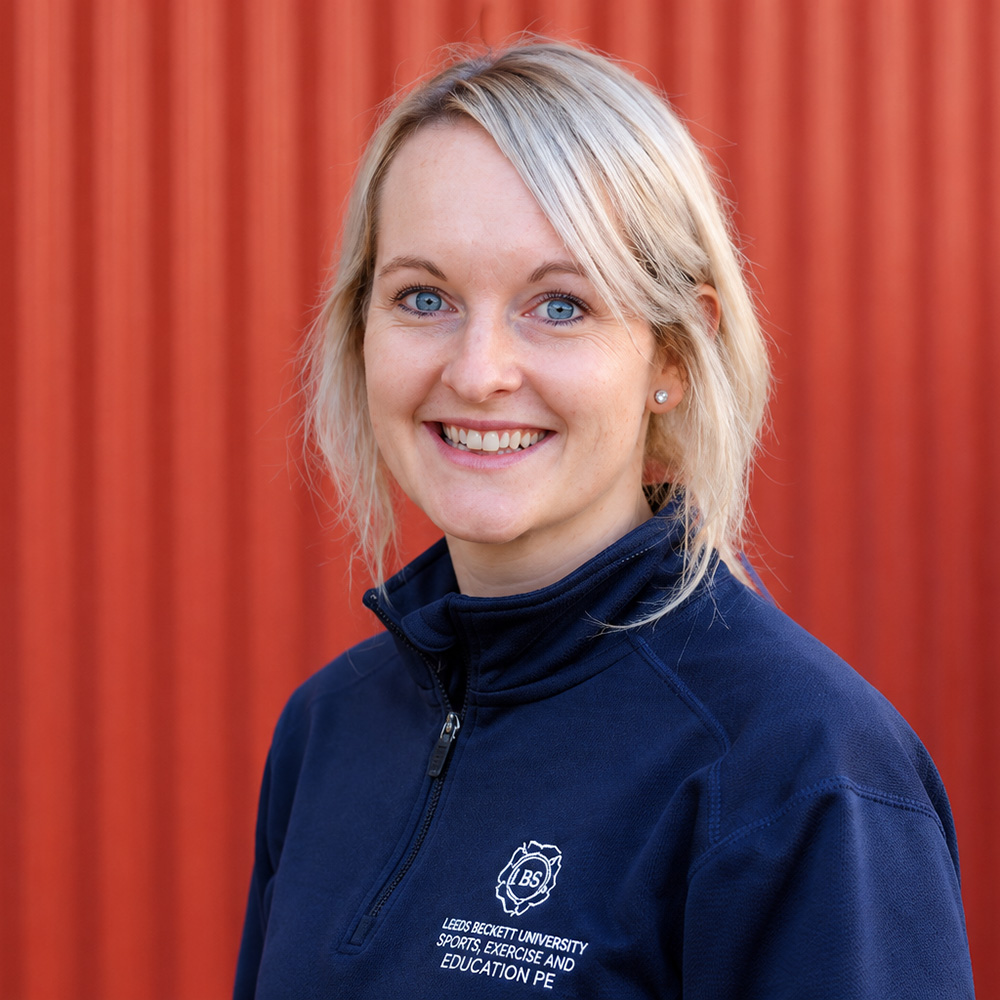
Level 7 Lead on the Secondary PGCE programme and Physical Education Lead.
Ex-Head of Physical Education and ECT lead at Carr Manor Community School.
Degrees
Masters in Education
University of Birmingham, Birmingham, United KingdomBSc Sport and Exercise Science
University of Birmingham, Birmingham, United Kingdom
Postgraduate training
Post Graduate Certificate of Education
University of Birmingham, Birmingham, United Kingdom
Related links
Research interests
Barriers to participation in PE for girls.
PE kit as a barrier to participation.
Publications (3)
Sort By:
Featured First:
Search:
 27 March 2026
Journal of Learning Development in Higher Education39(39):1-19 Association for Learning Development in Higher Education
27 March 2026
Journal of Learning Development in Higher Education39(39):1-19 Association for Learning Development in Higher Education
Research on student assessment literacy (SAL) has explored several points of interest, from broad conceptualisations of what SAL entails to developing SAL interventions and evaluating the overall benefits of SAL. There has been limited SAL research, however, from the student perspective, and how SAL actualises and transforms throughout the student lifecycle. Through the narratives of 22 final year undergraduate students in northern England, the present study explored SAL by focusing on student strategies in completing written coursework assessments. The context of coursework assessment provided insight into assessment practices during the interval from the issuing of the assessment to submission, and the increasing stakes of university assessments from first to final year. Assessment strategies undertaken to complete coursework showcased how students perceive best practice in relation to (1) coursework preparation, (2) engaging with support and (3) engaging with feedback. Findings highlight the need to centre student identity in relation to SAL actualisation and transformation, given that participants negotiated various stakes involved in university assessments, in relation to their unique learner identities. Some participants exhibited minimal SAL transformation but high levels of actualisation, while others transform in relation to high-stakes assessment and are selective in the degree of actualisation. All methods of SAL actualisation and transformation stem in part from students’ pre-university experiences.
06 April 2025
Curriculum Studies in Health and Physical Education17(3):1-21 Taylor and Francis Group
 Van Rossum T, Till K, Gregory S, Mitchell T, Cowburn I, Cooke D, Hyland M, Pedley N, Powell D, Sargent-Megicks B, Morley D
Low and declining movement competency and fitness in children presents a need to develop provision to reverse this trend. Physical Education (PE) curriculum has been recommended as an opportunity to achieve this, however this is often dominated by traditional games and presents challenges. This study aimed to conduct a preliminary exploration of the feasibility of a movement and fitness focussed intervention (Move to Sport; M2S), co-produced with nine PE teachers. Class-based and practical co-production sessions were recorded, transcribed and analysed using thematic analysis. Findings highlighted teachers recognised the demand for M2S and felt it would be best delivered at the end of primary and start of secondary school. Challenges included; a) understanding how to combine movement-based and sport specific approaches to delivering PE, b) differentiation, and c) modes of assessment. Future recommendations include conducitng a feasibility trial of M2S in school and the assessment of the impact of M2S on children.
24 July 2025
Curriculum Studies in Health and Physical Educationahead-of-print(ahead-of-print):1-20 Taylor and Francis Group
Van Rossum T, Till K, Sam G, Mitchell T, Cowburn I, Cooke D, Hyland M, Powell D, Sargent-Megicks B, Morley DA global decline in levels of movement competency and athleticism in children presents the urgent need to look at how to reverse this trend. Long term athletic development modelling proposes the habitual development of athleticism as a way to address this decline. Movement-based interventions have also been created in an attempt to improve children’s movement competence. This study aimed to explore the feasibility of a co-produced movement and athleticism programme (Move to Sport [M2S]). M2S was used with seven participating PE teachers during secondary PE lessons over a 6-week period. Qualitative data were captured through mid-intervention interviews and a post-intervention focus group. Feasibility was measured using four dimensions of a feasibility framework; implementation, practicality, adaptation and integration. Findings suggest that M2S could be implemented within the structure of a typical PE lesson. Teachers reported that M2S supported the development of sport specific skills that linked well with other activities and sports in their curriculum and promoted inclusion. Teachers felt that M2S could be integrated as an assessment tool or targeted intervention for children of all abilities. The findings suggest that M2S could be a potential solution in addressing declining movement competence and athleticism in young people.
Current teaching
Teaching on the Professional Values and Practice and Subject Studies modules.