
Leeds Beckett University - City Campus,
Woodhouse Lane,
LS1 3HE
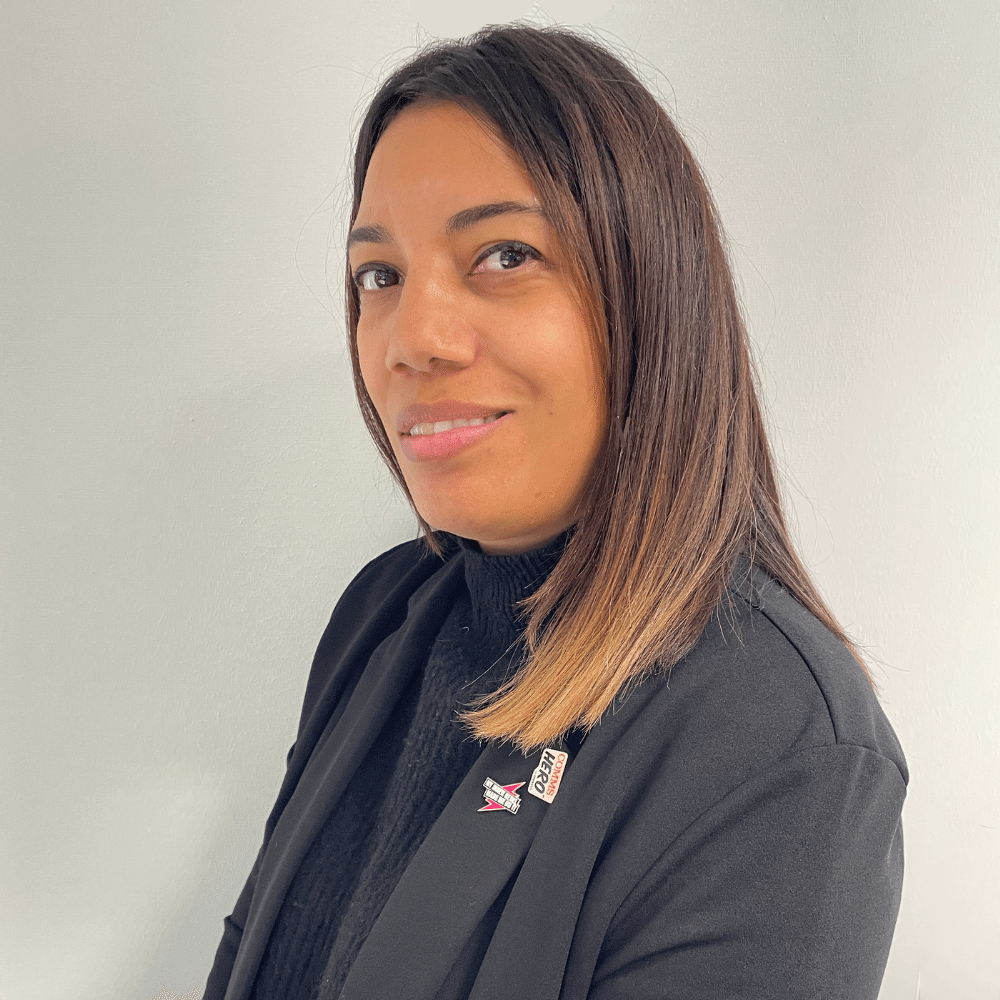
Teela Clayton
Lecturer
Teela Clayton is a PhD student and lecturer in Public Relations at Leeds Beckett University. Her research explores how marginalisation manifests in health communication, with a focus on politics, hierarchies, and the discursive operation of power in strategic messaging. A CIPR Accredited PR Practitioner with agency experience across healthcare, pharma communications, consumer, and B2B sectors, Teela has also created content for magazines and learning platforms. She contributes to EUPRERA, represents the Business School in the Early Career Researcher network, and volunteers with both a regional CIPR committee and Socially Mobile to support underrepresented groups in management. At Leeds Beckett, she leads the Issues and Crisis Management module, lectures on Corporate Communications and helps co-ordinate the postgraduate dissertation programme.
 0000-0003-3312-0247
About
Teela Clayton is a PhD student and lecturer in Public Relations at Leeds Beckett University. Her research explores how marginalisation manifests in health communication, with a focus on politics, hierarchies, and the discursive operation of power in strategic messaging. A CIPR Accredited PR Practitioner with agency experience across healthcare, pharma communications, consumer, and B2B sectors, Teela has also created content for magazines and learning platforms. She contributes to EUPRERA, represents the Business School in the Early Career Researcher network, and volunteers with both a regional CIPR committee and Socially Mobile to support underrepresented groups in management. At Leeds Beckett, she leads the Issues and Crisis Management module, lectures on Corporate Communications and helps co-ordinate the postgraduate dissertation programme.
PhD Student and Lecturer in Public Relations
Teela Clayton is a PhD student and lecturer in Public Relations at Leeds Beckett University. Her doctoral research examines how marginalisation manifests within health communication, with a particular focus on the politics of strategic messaging, the role of institutional hierarchies, and the ways power operates discursively across public health narratives. Teela’s work bridges critical health studies and public relations practice, aiming to design inclusive, participatory strategies that challenge structural inequalities and reimagine how health information is communicated with diverse communities.
Alongside her research, Teela contributes actively to the wider academic community. She is engaged with the European Public Relations Education and Research Association (EUPRERA) and represents the Leeds Beckett Business School in the newly established Early Career Researcher (ECR) network.
A Chartered Institute of Public Relations (CIPR) Accredited PR Practitioner, Teela brings valuable industry experience to her teaching. Her agency background spans healthcare, pharma communications, consumer, and B2B sectors. She also volunteers on a regional CIPR committee and supports Socially Mobile, a Community Interest Company advocating for greater opportunities for underrepresented groups in management and leadership positions. Beyond agency work, she has produced content for magazines and learning platforms, further broadening the reach and impact of her professional expertise.
At Leeds Beckett, Teela teaches across undergraduate and postgraduate programmes. She leads the Issues and Crisis Management module, which includes an immersive crisis simulation delivered in partnership with industry experts. At postgraduate level, she leads on Corporate Communications in an Intercultural Context and works with a team of researchers to design and deliver the dissertation programme, supporting students in producing rigorous, practice-informed projects.
Related links
Research interests
Current projects:
Using the past to understand the present: Government communication and the hegemony of the health crisis - My PhD research looks at two similar moments in UK history to understand how the government communicated with its publics.
In Other Words: Predicting Dimensions of Trust through Free Word Associations - The aim of this study is to develop and test a model to predict the type and strength of trust, based only on properties generated via a short-form word association test.
Publications (13)
Sort By:
Featured First:
Search:
Constructing Deservingness: Media Frames, Immigrant Ethnicity and Public Emotion
From ‘Don’t Die of Ignorance’ to ‘Stay Home’: the institutionalisation of UK government crisis PR as hegemonic sensemaking (1980s - 2021)
Women in Public Relations in North America. EUPRERA Report Vol 3., No. 1.
Women in SMEs: A Systematic Literature Review (2000-2021)
 2021
Leeds Beckett University
2021
Leeds Beckett University
 Konstantopoulou A, Leung M, Trem K, Carbery C, Ogbemudia J, Clayton T, Heron E, Reynolds M, Mahtab T
Barriers for Women in SMEs Cutting Across Borders: A Systematic Literature Review on the Position of Women in SMEs (2000-2021)
2023
Konstantopoulou A, Leung M, Vollum-Dix K, Carbery C, Ogbemudia J, Clayton T, Heron E, Reynolds M, Mahtab TWomen and networking: A systematic literature review (1985-2021)
2021
Leeds Beckett University
Topić M, Carbery C, Arrigoni A, Clayton T, Kyriakidou N, Gatewood C, Shafique S, Halliday SWomen and Networking: A Systematic Literature Review (1985-2021).# WECAN report
2021
Leeds: Leeds Beckett University
Topić M, Carbery C, Arrigoni A, Clayton T, Kyriakidou N, Gatewood C, Shafique S, Halliday SThe Architecture of Exclusion: How ritualised communication reinforces hegemonic repertoires
03 June 2026
76th Annual International Communication Association Conference Public Relations Pre-Conference Cape Town
Back to the Future: A Systematic Literature Review of 40 Years of Government Communication Through the HIV/AIDS and COVID-19 Pandemics
Back to the Future: The Hegemony of a Health Crisis
03 August 2021
Frontiers in Communication6:731979 Frontiers Media SA
Diers-Lawson A, Johnson S, Clayton T, Kimoto R, Tran BX, Nguyen LH, Park KSaliou (Eur J Epidemiol, 1994, 10 (4), 515–517) argued that pandemics are special kinds of crises and requires the public health sector to focus on: 1) reducing uncertainty, 2) rumor mitigation, and 3) ensuring the public reduces their risk of contracting the disease. With this as a backdrop, the central aim of this research is to better understand the connections between public information seeking, evaluation, and self-protective behaviors in the COVID-19 pandemic and focuses on a comparison between the Republic of Korea and Vietnam to provide insights into the influence of the individual, institutional, and information factors influencing people’s experience with COVID-19. Thus, there are two major contributions of this study. First, it provides a cross-theory evaluation of the factors that contribute to information seeking, evaluation, and self-protective behaviors. Second, the study identifies potentially critical differences in information seeking, evaluation, and self-protective behaviors based on acute disease reproduction in countries with a successful pandemic suppression history. Findings suggest that in countries where there are high levels of trust and satisfaction even small changes in the infection rates lead to different information seeking and self-protective behaviors.
21 December 2024
Suvremene Teme : Contemporary Issues15(1):13-28 Political Science Research Centre
Topic M, Carbery C, Arrigoni A, Kyriakidou N, Gatewood C, Shafique S, Halliday SThis paper analyzes the literature on women and networking between 1985 and 2021 to explore what is known about networking and its effect on women, and what new research is needed on networking. The authors analyzed a total of 78 articles published in women's and gender studies journals. Thematic analysis and three-tier coding have been used in analyzing available articles. Findings reveal that organizational cultures did not change during the four decades of research as boys' clubs still exist and take men ahead much more than women's networks take women ahead. Old boys' clubs remain persistent and more powerful than women's networks and women do not report benefits from networking even when they engage with this, often-seen, masculine practice. Women also report exclusion from important professional networks and this is a theme that consistently runs through research, and additionally, many women cannot join networks due to the social expectation that women will look after families.
07 September 2021
Leeds Beckett University Leeds Publisher
Topic M, Carbery C, Arrigoni A, Clayton T, Kyriakidou N, Gatewood C, Shafique S, Halliday SThis report analyses literature on women and networking between 1985 and 2021, as published in women and gender studies journals. Authors analysed a total of 78 articles published in European Journal of Women’s Studies, Feminist Review, Women’s Studies International Forum, Feminist Theory, Gender & Society, Journal of Gender Studies, Frontiers: A Journal of Women Studies, Signs, Women Studies Quarterly, Feminist Economics, Gender in Management: An International Journal (previously called Women in Management Review,), Gender, Work & Organization, Feminist Studies, Hypatia and International Journal of Gender and Entrepreneurship. Thematic analysis and three-tier coding have been used in analysing available articles. Findings reveal that organisational cultures did not change during the four decades of research as boys clubs still exist and take men ahead much more than women’s networks take women ahead. Old boys clubs remain persistent and more powerful than women’s networks and women do not report benefits from networking even when they engage with this, often seen, masculine practice. Women also report exclusion from important professional networks and this is a theme that consistently runs through research, and additionally, many women cannot join networks due to the social expectation that women will look after families. Networking thus presents a structural barrier and this is visible throughout decades of analysed research, with recurring and repeating themes of networking as a structural barrier, exclusion of women and persistent power and influence of old boys clubs.
Current teaching
Course:
- MA Public Relations and Strategic Communications
- MSc Journalism
- BA (Hons) Marketing and PR
Modules:
- Corporate Communication in an Intercultural Context
- Issues Management and Crisis Communication
- Dissertation
- Applied Practice





